
Teacher
It is a kind of magic when, to the count of one-two-three,
Without anyone else even touching us,
We change within ourselves ever so slightly,
And the whole world changes around us.
Dear friends!
In the spiritual world, as in the physical one, a summit can be reached by many different paths. One path may be long, another short; one winding and difficult, another direct and easy. Yet each of them still leads upward. In the search for spiritual knowledge there are many methods, tools, and approaches that help us discover, through direct experience, the hidden essence of our being and direct the mind toward the very source of its existence: the soul.
Yoga is a path that allows a person, step by step, to know oneself on every level: body, mind, and soul. Yoga refines the body and the senses, calms the mind, educates the intellect, and leads the soul toward peace. Unfortunately, many people who have not touched the depth of yoga take this path of self-knowledge, self-development, and self-realization to be merely a physical discipline, and hatha yoga to be only a form of gymnastics. But yoga is far more than physical exercise. It embraces the human being on the cellular, mental, intellectual, and spiritual levels.
It is never too late to come to yoga. The great B.K.S. Iyengar taught the Queen of Belgium to stand on her head when she was seventy-eight and suffering from Parkinson's disease. But why wait? There is an English saying: better late than never, but better never late. Russians, unfortunately, translated and actively put into practice only the first half of this fine idea.
Yoga will help you know yourself, love yourself in the best sense of the word, and become happy.
YOGA B.K.S. IYENGAR
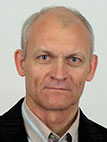 Teacher Alexander Lobanov, Doctor of Engineering Sciences, full member of the Russian Academy
of Reliability (Moscow) and the European Academy of Natural Sciences (Hannover). He is the author of
more than 160 scientific works on semiotics, systemology, qualimetry, and management, published in
Russia, Great Britain, Germany, Spain, Cuba, and the United States. Selected scientific works.
Teacher Alexander Lobanov, Doctor of Engineering Sciences, full member of the Russian Academy
of Reliability (Moscow) and the European Academy of Natural Sciences (Hannover). He is the author of
more than 160 scientific works on semiotics, systemology, qualimetry, and management, published in
Russia, Great Britain, Germany, Spain, Cuba, and the United States. Selected scientific works.
Yoga education
- – in 1990, training in transcendental meditation with a group of Indian teachers who came to Moscow on the instruction of Maharishi Mahesh Yogi, the developer of this technique;
- – in 1990 and 1991, intensive seminars with Faek Biria, director of the B.K.S. Iyengar Yoga Institute in Paris and B.K.S. Iyengar's foremost student;
- – in 1994, an intensive seminar with Elena Fedotova, a student of B.K.S. Iyengar and translator of his first book, Yoga Deepika, published in Russia in 1993;
- – in 1992-1996, regular classes in Moscow in the group of Elena Ulmasbaeva, a student of Faek Biria and B.K.S. Iyengar and founder/director of the Yoga Practika training center network;
- – in 1998, an intensive seminar with Andrei Sidersky, author of The Third Discovery of Power and Yoga of Eight Circles, founder of the Yoga-23 school;
- – in 1998, an intensive seminar with Viktor Boyko, founder and director of the Classical Yoga Center and author of Yoga: The Art of Communication;
- – in 1999, a seminar with Anatoly Zenchenko, one of the authors of Yoga of Eight Circles: Set Training and a yoga host on the television channel Zhivi;
- – in 2009, an intensive seminar with B.K.S. Iyengar;
- – in 2015, yoga teacher training courses with Yogi Dinesh, head of the Yoga Teacher Training School OM SHANTI OM.
In addition:
- – in 1989, training in breathing exercises with A.N. Strelnikova;
- – in 1994, study at the center of the CIS Association of Traditional Healers in diagnostic and therapeutic bioenergetics, with certification in bioenergetics and extrasensory healing;
- – in 1994 and 1995, holotropic breathing practice at Clinical Hospital No. 6 of the Ministry of Defence of the Russian Federation;
- – co-author and publisher, together with S.Ya. Sautov, of the book Learn to Heal in 1995;
- – in 2002, initiation into the First Degree of the Usui System of Natural Healing (Reiki);
- – in 2003, completion of the first-level Zhong Yuan Qigong training course.
Experience in teaching B.K.S. Iyengar yoga in his own developed interpretation – since 1991. Group and individual lessons, as well as one-day and multi-day training programs.
He speaks conversational English and can conduct yoga classes in English.
Class schedule
Studio address – 17A Divnomorskaya Street, in the same building as the Sberbank branch.
Monday, Wednesday, Friday: – from 6:30 pm to 8:30 pm
Price for a single individual class – 2500 RUB.
Individual class duration – 2 hours 30 minutes.
Subscription price for one actual month (not a calendar month):
- for one person with up to 17 classes – 10,000 RUB;
- for one person with up to 13 classes – 8,000 RUB;
- for a couple with up to 17 classes – 18,000 RUB;
- for a couple with up to 13 classes – 15,000 RUB.
The group practice program includes different versions of asana sequences with distinct therapeutic emphases:
- – one is focused on the whole spine, lengthening it in forward bends, followed by twists and strengthening of the muscles along the separated vertebrae;
- – another focuses on the whole spine through backbends, followed by strengthening of the muscles along the separated vertebrae;
- – a third works with the whole spine, shoulder girdle, and arms: joints, muscles, and blood vessels;
- – a fourth focuses on the joints, muscles, and vessels of the legs, the abdominal organs, and the abdominal muscles;
- – a fifth works with the whole musculoskeletal system, the whole spine, with special attention to the neck;
- – a sixth focuses on the urogenital organs, pelvic girdle, and hip joints;
- – a seventh is devoted to standing poses;
- – an eighth consists of the author's own asanas, which may rightly be called morning asanas, because against a background of deep meditation they awaken and deeply work through the whole musculoskeletal system and the internal organs;
- – a ninth focuses on the joints of the legs and the whole body;
- – a tenth includes inverted asanas.
The sequence variants alternate. From class to class there is slight rotation of asanas within each variant. Every class begins with 15 minutes of meditative preparation for practice and ends with 20 minutes of deep relaxation in Savasana. The asana sequence itself lasts 1 hour and 25 minutes.
What is fundamentally distinctive about the proposed conceptual technologies and practical methods?First, the movement from the initial position to the final form of an asana is offered as a sequence of actions, each action being either a release or an activation of a particular area of the body. To perform a given action one must be present in that area of the body, and after performing it one must preserve its result there. By adding action to action, we add our presence to area after area while preserving our presence in the previous areas and the results of the actions carried out there. In this sense, the final form of the asana is assembled like a construction set.
Second, if arriving at the final form of one asana requires, for example, five actions, then adding at least one more action to that chain can already lead to the final form of another asana. Further additions of new actions make it possible to arrive at the final form of a third asana, and so on.
Third, one can say that the meditative component of yoga literally permeates the entire process of moving toward the final form of an asana. Practical bodily actions on the way to the final form are intertwined with meditative actions and performed simultaneously with them.
Fourth, the simultaneous performance of practical bodily actions and meditative actions of consciousness is proposed not as a matter of split seconds, but over tens of seconds and minutes. This approach allows a beginner to awaken bodily awareness in separate areas and gradually form deep awareness of the body everywhere and as a whole.
Fifth, the emphasis on a conscious and unhurried movement toward the final form of the asana makes yoga practice safe and non-traumatic.
Sixth, there are also techniques that may rightly be considered purely meditative. These include, first of all, techniques for tuning in to the forthcoming sequence, techniques for releasing the head, techniques of presence in the body and in the head during movement toward the final form of the asana and in transitional positions between asanas, as well as techniques for performing Savasana.
All these techniques are also realized as sequences of definite actions. Such actions include, among others:- – placing one's explicit presence in a particular area of the body;
- – relaxing a body area with explicit awareness;
- – activating a body area with explicit awareness;
- – placing one's explicit presence throughout the whole body;
- – relaxing the whole body with explicit awareness;
- – activating the whole body with explicit awareness;
- – adding one's explicit presence to a new body area while preserving explicit presence in the previous one;
- – transferring one's explicit presence from one body area to another while moving the previous area into a background mode of awareness;
- – shifting the whole body from explicit awareness into background awareness.
What characterizes the author's style of teaching is that the principles and aims of all the components of yoga are realized throughout the practice of asana and pranayama. On the way to the final form of the asana, the practitioner successively enters the states of Pratyahara, Dharana, Dhyana, and Samadhi.
Separate classes are also offered in pranayama, including training in Full Yogic Breathing, and classes devoted to mastering the practice of bandhas.
After mastering Full Yogic Breathing and the basic elements of B.K.S. Iyengar yoga asanas, students are offered training in the complex The Eye of Revival in the author's own version. The difference between this version and the one described in Peter Kelder's book is as follows:
- – first, each of the five ritual actions is based on Full Yogic Breathing;
- – second, each of the five ritual actions is filled with many elements of B.K.S. Iyengar yoga and the author's own techniques;
- – third, as a sixth ritual action, an eightfold repetition of Maha Bandha based on Full Yogic Breathing is proposed;
- – fourth, original authorial energetic techniques are implemented throughout the sequence.
This way of practicing The Eye of Revival is incomparably more effective than the version first described in Peter Kelder's book.
Goals of the practice:
- – deeper self-knowledge on the levels of body, mind, and soul;
- – continuous development on all levels and harmonization of the personality;
- – a deeper understanding of oneself in the surrounding world;
- – a more comfortable coexistence with the surrounding world.
Physical health comes as an entirely natural consequence.